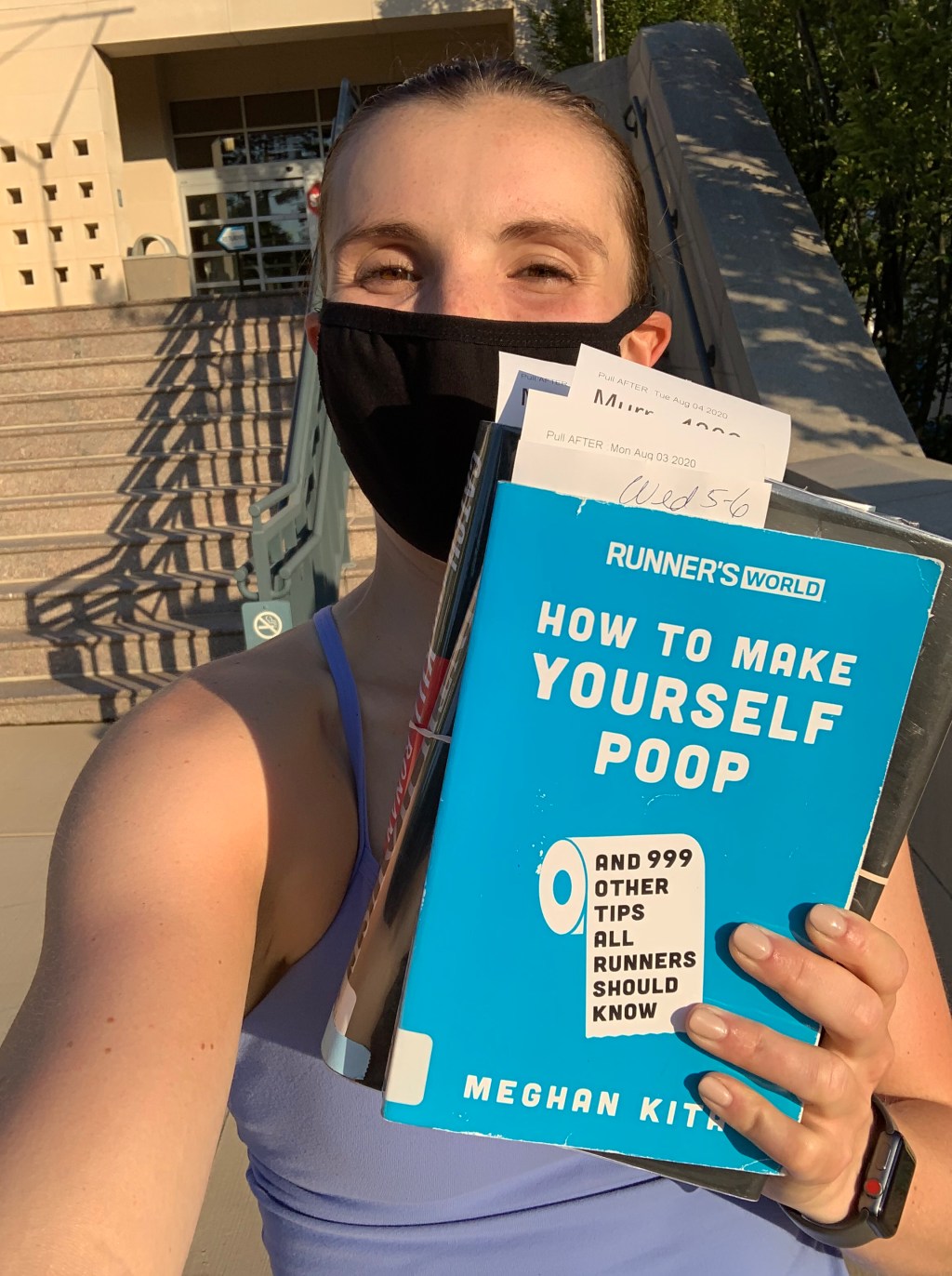

I. am. still. so. excited. about. this. book.
I’m back for another installment of some of the best tips from How to Make Yourself Poop and 999 Other Tips All Runners Should Know by Meghan Kita. I have already implemented some of the insights into my training and have seen great results. Not only am I running better and more consistently, but I can make informed decisions around creating workouts, crosstraining, fueling, and recovery. Even if you aren’t a runner, there’s a lot you can learn from this book to make you more effective in your chosen sport. Below are some more tips I’ve found especially helpful in this next section:
How Can I Estimate How Fast I’ll Finish on Race Day?
- For a 5K – run 5 x 1K at 5K effort with a 400m recovery jog in between. Multiply the average of those 1K times by 5 to get an estimated race time.
- For a 10K – run 5 x 1mi at 10K effort with a 400m recovery jog in between. Multiply the average of your mile times by 6.2 to get your estimated race time.
- For a half-marathon – run a 10K at 80% effort. Convert your finish time into a decimal, add 0.93, and multiply by 2.11 to estimate race time.
- For a marathon – run marathon pace for 10-14mi of a 20mi run. The average pace of those miles is about what you’ll be able to run on race day (assuming you have trained and tapered properly according to the book).
I’ve Finished a Race…. Now What?
- First, take a break! Walking or easy-effort cross training are a good idea to help get blood flowing to your muscles and stay mobile. Try a week or two after a half marathon and two to four weeks after a full.
- In the week after your rest, start by running every other day at an easy pace. Aim for 20-30% of your peak week’s mileage.
- In the next week, you can up mileage to half of your peak week’s, but continue to keep the pace easy.
- Three weeks after you end your rest period, you can up your mileage to 90-100% of peak week mileage. Continue at the easy pace. If you don’t have another race coming up, you can stretch this our farther or keep the pace very mild.
- Four weeks out you can begin to incorporate speed work, tempo runs, and other parts of your pre-race training. However, this is more applicable for runners who have another race coming up.
How Do I Prepare for a Triathlon?
- Before signing up, be sure you are able to swim 50 meters (one pool lap) and bike for 30 min without stopping. Once you can hit these numbers, pick a “sprint-distance” triathlon (1/4mi swim, 12-mi ride, 5k run) 6+ weeks in the future.
- Be prepared to work out 5-6 days per week since you will need to train for three sports simultaneously. Some days you will do workouts that combine two elements of the triathlon.
- Check out runnersworld.com/trainingplans for some good training plan options. Highly recommended since you are training for two sports that might be new to you.
Hope you enjoyed this second installment. Check back next week for more quick tips!
Want to pick up your own copy? You can snag one here.


 Alexa Murray
Leave a reply to swosei12blog Cancel reply