
Congratulations you’ve made it! You’ve been training hard, implementing all of the great tips recapped in this series. Now it’s time to talk about race day. Ready, set, go!
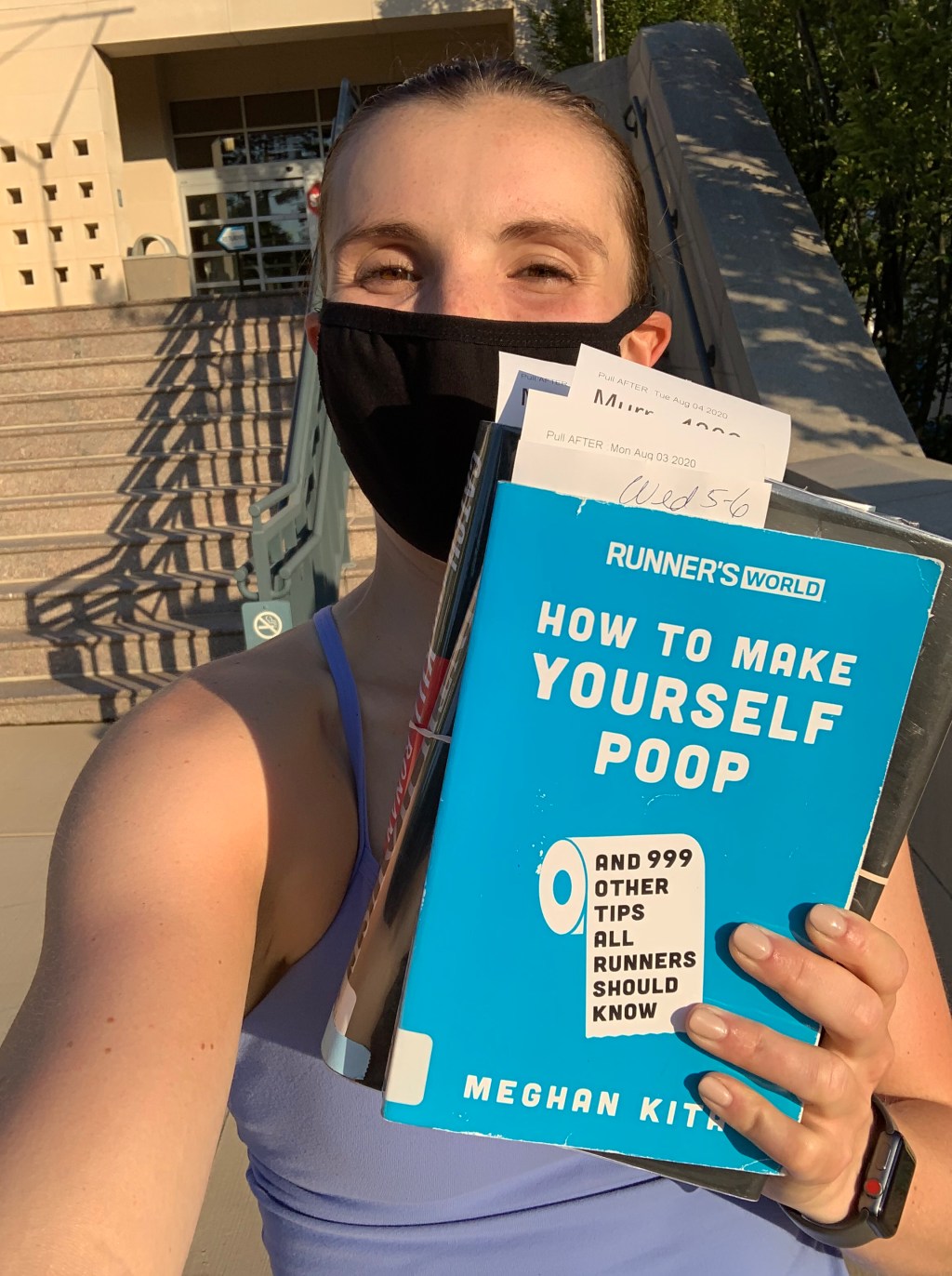
Welcome to the final installment of the best tips from How to Make Yourself Poop and 999 Other Tips All Runners Should Know by Meghan Kita.
What’re Your Raceday Top Tips?
- Don’t try anyting new on raceday. This means wear clothes you’re comfortable with, eat and hydrate in the same way, and warm up as usual. While it can be tempting to save some new gear for the starting line, you don’t know how if it might, say, cause terrible chaffing and you don’t want that to derail your race.
- The same principle applies to your morning routine. Make sure you know where you need to be when and scout everything out beforehand. You don’t want to miss your turn morning of because you’re in an unfamiliar place. Also, make sure you give yourself ample time. There is no special award for the runner who just makes it to the start.
- Warm up appropriately. While it may seem counterintuitive, the shorter the race the longer you will need to warm up. Make sure you are setting yourself up for success (and adequately preparing your body to achieve peak performance and reduce injury risk).
- Avoid sprinting off the line. Given your pre-race addrenaline and pent up energy (from adequate rest and a good tapering schedule), it may be tempting to go out strong. But that sets you up to hit the wall later on. Pace yourself and you will thank yourself later.
A Few Tips for Half or Full Marathons for First-Timers
- Put petroleum jelly on your feet especially between/under your toes and on the outside edges. Also, lube up any places where you experience chaffing. Check out some of the earlier posts in this series for more anti-chaffing tips.
- It is likely that you will only be allowed to bring a clear bag into the race area. You will probably get one at the expo (where you pick up your bib the day or few days before the event). Even so, be prepared for your items to be on display in the clear packaging.
- Take a picture of your bag tag when you drop your stuff at the gear check. There’s a chance it will get lost (you might lose it or it might get separated from your bag), so you want proof your stuff is your stuff or it might be hard to get back. Definitely not something you want to be dealing with after finishing a race.
- Pack dry clothes. You’ll be hot right after you finish but that will go away quickly. You’ll want to be able to change into dry clothes completely or at least layer up.
- If you are racing in colder weather, bring throwaway clothes. These are layers you wear either warming up or for the first few miles and shed as you go. Check out your local thrift store or raid the back of your closet for options. Race organizers often collect discarded items and donate them so you don’t need to feel bad about littering.
- Plan to arrive at least an hour before the expected start time. This could even be longer for races with thousands of participants.
- As Jess Sims says, “No ego amigo.” If you have to give your expected pace or finish time during registration to get slotted into a corral, be realistic. You don’t want to end up in a corral that is way faster than you want to run and other runners don’t want to have to bob and weave past you when you hit the wall.
How Can I Use My Breath to Check My Pace?
- Easy run — you should be able to speak full sentences. Great for catching up with a friend!
- Tempo — you should be able to say a few words. Not full sentences but still something.
- Speed — speaking should be difficult. Don’t let that alarm you. Remember that you are in control of your breathing and pace. If you are really struggling it might be a sign you need to add more rest.
What If I Want to Race in a Costume?
- First and most importantly, check to ensure that your race allows it.
- Look into Guinness World Records for your age, sex, and event to see if you might be within striking distance. If you go this route, it would be a good idea to run with a friend since you will need photos to prove you kept the costume on for the entire race.
- Practice running in your costume. If you are too shy to run around your neighborhood, you might consider entering shorter races and trying it out there. This will also help you identify any problem areas.
- Ensure your costume does not alter your gait. Sumo suits are very amusing, but if they mean you might injure yourself by modifying your natural stride then they are not worth it.
I hope you enjoyed this series. I know I learned a ton. The running community is truly special so if you have always wanted to give it a shot I hope this helps you along your way.
Read all those tips and want to know more? Grab your own copy of Kita’s book here.

 Alexa Murray
Leave a comment